How Coffee Filter Paper Is Manufactured: A Step-by-Step Guide from Raw Pulp to Brewing
Coffee filter paper may look simple, but producing a high-quality filter requires precise control at every stage of manufacturing.
The choice of raw materials, fiber processing, paper formation, thickness control, and quality inspection all influence how the filter performs during brewing. A well-manufactured filter helps deliver a stable flow rate, clean flavor, and consistent extraction.
In this guide, we'll walk through the complete coffee filter paper manufacturing process—from raw pulp to the finished filter ready for packaging.
Step 1: Selecting the Right Raw Materials
Everything starts with the raw fiber.
Most premium coffee filter paper is produced from food-grade virgin wood pulp because it offers:
- Neutral taste
- High purity
- Excellent wet strength
- Stable filtration performance
Depending on customer requirements, manufacturers may also use other natural fibers, such as abaca, or blended fiber formulations to achieve different brewing characteristics.
The quality of the raw material forms the foundation of the final product.
Step 2: Pulp Preparation
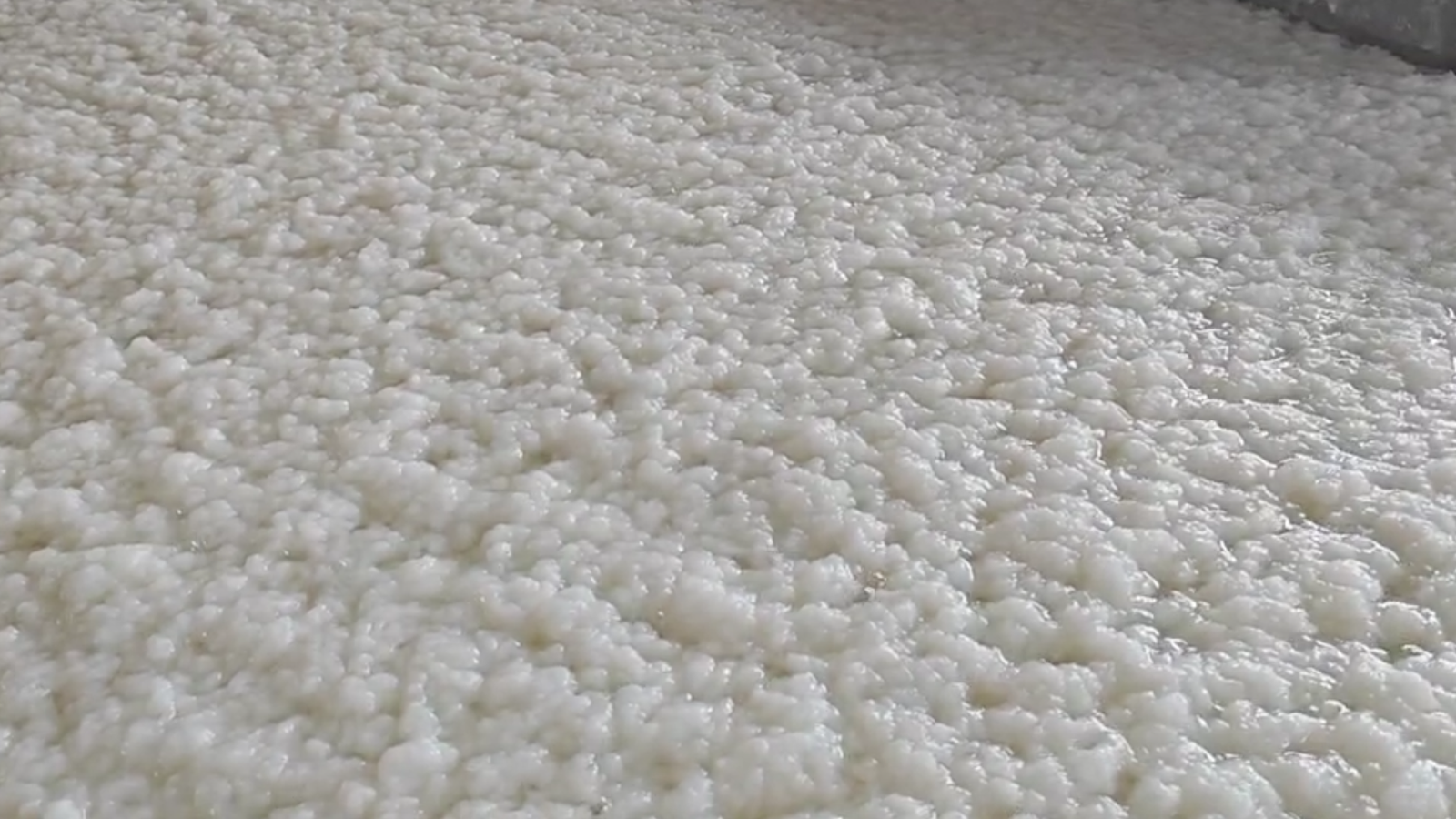
Before paper can be formed, the raw pulp must be mixed with water to create a uniform fiber suspension.
During this process, the fibers are refined to achieve the desired length and distribution.
Proper pulp preparation helps improve:
- Fiber bonding
- Paper strength
- Thickness consistency
- Flow rate stability
A well-controlled pulp mixture ensures the finished paper performs consistently from batch to batch.
Step 3: Paper Forming
The fiber suspension is evenly distributed onto a moving wire mesh, where water drains away and the cellulose fibers begin forming a continuous paper sheet.
This stage largely determines the paper's structure, including:
- Fiber distribution
- Porosity
- Surface uniformity
An even paper web helps maintain consistent filtration performance during brewing.
Step 4: Pressing and Drying
After the paper sheet is formed, it passes through a series of press rollers that remove excess water.
The paper then enters a controlled drying system where temperature and moisture are carefully managed.
Proper drying improves:
- Mechanical strength
- Dimensional stability
- Moisture consistency
These factors are essential for producing filter paper that maintains its shape during brewing.
Step 5: Thickness and Basis Weight Control
One of the most important quality indicators is paper consistency.
During production, manufacturers monitor factors such as:
- Thickness
- Basis weight (GSM)
- Moisture content
- Uniformity
Maintaining tight production tolerances helps ensure that every filter delivers similar brewing performance.
Even small variations in paper thickness can influence water flow and extraction time.
Step 6: Converting and Die-Cutting
Once the paper roll has passed quality inspection, it moves to the converting process.
Depending on customer requirements, the paper is cut into various shapes, including:
- Cone filters
- Flat-bottom filters
- Round coffee filters
- Basket filters
- Custom OEM designs
Precision die-cutting ensures accurate dimensions and a consistent fit for different brewing equipment.
Step 7: Quality Inspection
Before packaging, finished filters undergo multiple quality checks.
Typical inspection items include:
- Appearance
- Dimensions
- Thickness
- Basis weight
- Flow rate
- Packaging quality
Some manufacturers also perform brewing tests to verify filtration performance under actual coffee brewing conditions.
Strict quality control helps ensure product consistency across every production batch.
Step 8: Packaging and OEM Customization
The final stage is packaging.
Manufacturers typically offer various OEM services, including:
- Private-label packaging
- Custom printed boxes
- Bulk packaging
- Retail packaging
- Barcode labeling
- Multilingual instructions
For coffee brands and wholesalers, customized packaging helps strengthen brand identity while meeting market requirements.
Why Manufacturing Quality Matters
Coffee filter paper directly affects the brewing experience.
A well-manufactured filter provides:
- Stable flow rate
- Clean cup clarity
- Reliable extraction
- Consistent brewing performance
- Reduced paper taste
These characteristics depend not only on the paper material but also on the precision of the manufacturing process.
Choosing an experienced manufacturer helps ensure that every filter performs consistently, whether it is used in a café, coffee roastery, or home brewing setup.
Looking for a Reliable Coffee Filter Paper Manufacturer?
At Usesoon, we specialize in manufacturing high-quality coffee filter paper for coffee brands, distributors, and OEM partners worldwide.
Our manufacturing capabilities include:
- Food-grade coffee filter paper
- Multiple filter shapes and sizes
- OEM & ODM customization
- Private-label packaging
- Strict quality control
- Stable production capacity
Whether you're developing a new coffee accessory line or expanding your existing product range, our team is ready to support your project with reliable manufacturing and customized solutions.
Contact us today to request samples or discuss your OEM coffee filter paper requirements.