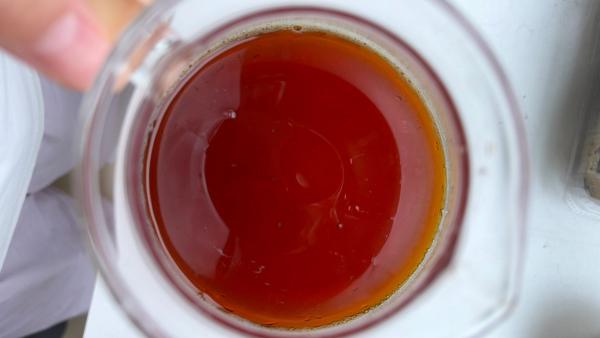
What Do You Do With the Last 10% of Your Coffee? ☕
If you're leaving the last few sips behind, your filtration might be part of the reason.
Have you ever noticed what happens near the end of a cup of coffee?
The first few sips are great.
Then you get closer to the bottom.
The texture changes.
You notice fine coffee particles.
Maybe a little sediment.
And sometimes, you simply stop drinking.
That last 10% stays in the cup.
But why?
Where Does the Sediment Come From?
During brewing, water extracts flavour from the coffee grounds.
At the same time, very fine coffee particles can move through the brewing process.
Depending on the grind size, brewing method and filter performance, some of these fine particles may reach the final cup.
Over time, they can settle at the bottom.
The result?
A cup that may feel clean at the beginning—but less enjoyable at the end.
The Filter Is Part of the Brewing Process
We often talk about:
- Coffee beans
- Roast level
- Grind size
- Water temperature
- Brewing time
But what about the filter?
The filter is the final barrier between the coffee grounds and the cup.
Its job isn't simply to let coffee through.
It also needs to retain unwanted particles while allowing the coffee to flow at an appropriate rate.
That means filtration is always a balance.
Too much restriction can slow the brewing process.
Too little particle retention can leave more sediment in the cup.
The right filter needs to do both.
A Cleaner Cup From First Sip to Last
A good filter doesn't make the coffee for you.
But it can help create a cleaner final cup by reducing the amount of fine coffee particles that pass through during brewing.
Because a good coffee experience shouldn't only be about the first sip.
What about the last 10%?
Maybe it shouldn't be left behind. ☕